Custom Code Intelligence · Agentic re-engineering for SAP
Understand what really runs. Then build it better.
Sysparency turns decades of SAP custom code into a knowledge graph with source citations: every program in its module and process, every dependency, the real usage. Your teams and your AI agents work on facts, from the first analysis to the agentic rebuild.
- 10×
- Faster custom-code analysis — months become days
- 30%+
- Lower cost per SAP custom-code initiative
- 100%
- Custom objects documented, traceable, governable
- 0
- Black boxes — tribal knowledge becomes a living graph
Sysparency is a Custom Code Intelligence platform for SAP. It reads custom ABAP code and turns it into a knowledge graph with source citations that people and AI agents can trust.
Trusted on the systems that cannot fail
- Gebrüder Weiss


- Salzburg AG
- Wiener Netze





“We replaced “we’re not sure what happens if we touch that” with a query that answers in seconds.”
Relationships, not isolated programs
Understanding one program is diligence. Understanding the whole picture is leverage.
Sysparency does not just document what each program does. It shows how everything hangs together: who else writes to the same table, which rule sits copied three times across includes, which batch job repairs at night what the dialogs fail to check by day, which three transactions are really one business step. Every custom object is assigned to its SAP module and business process, so you see not just what one program does, but what was extended overall and how it interlocks. That turns into process understanding. And process understanding turns a migration into a redesign that lifts the whole system and improves it in the same move, instead of translating it program by program.
- 01
Program
What it does, which fields, tables and rules. Cited down to the source line.
- 02
Relationships
Calls, shared data, interfaces, locks, number ranges, copied includes.
- 03
Whole picture
Every write path into a table, every entry into a business step, observed usage.
- 04
Process
Module and process assignment for every extension: which business step it carries, what else was extended there, how often it runs.
- 05
Redesign
Lift the whole system and improve it in the same move: rules once instead of twelve times, one entry point instead of twelve transactions, repair runs retired, dead fields gone.
Example, built fully agentically
25 year old separate transactions. One launchpad. And a better system.
Twelve SAP GUI module pools of a legacy application became a launchpad with three Fiori Elements apps, a dashboard and four RAP business objects. The agent understood the old programs through Sysparency MCP server and built the new system through SAP ADT MCP server. Not a single line was written by hand, and the graph decided what was built differently.
Legacy application on a trial system. Screens from the report and the new launchpad.
Transcript
The video shows, in order: the SE93 list of the twelve legacy transactions; one of them, the display program with Dynpro 0200 and its flat field list; the Sysparency report page for the booking table with its eleven writing applications and their call counts; a program page with its technical workflow, usage and business meaning; the new Fiori launchpad with three apps and a dashboard; the same record as a Fiori object page with occupancy, capacity, bookings and a price action; and the four metrics 12 to 4 programs, 3 to 1 transactions, 0 to 7 rules on save, 0 to 4 analytics.
- 12 → 4
- programs → business objects, one OData service
- 3 → 1
- transactions per booking → one click path
- 0 → 7
- rules on save, instead of a nightly check run
- 0 → 4
- analytics: KPIs, charts, ranking, trend
Your agent, on facts
Claude, ChatGPT, Copilot or your own framework. Sysparency gives the agent the business context.
The Sysparency MCP server exposes the knowledge graph of your custom code to any MCP-capable client. The agent asks, gets answers with their sources, and hands over to SAP’s tools to build.
- Business context per program: module, process step, what it is for, who depends on it.
- Seven read-only tools: schema, Cypher, semantic search, object list, metadata, read and search source.
- Back to standard: with SAP’s documentation MCPs the agent finds the standard replacement and documents the gap.
- Hand-over to SAP ADT MCP server: generate, activate, transport.
- Several systems at once: connect the MCP server of each SAP system and the agent compares, consolidates and rolls out across them.
Sysparency Assistant
- graph: writers of SBOOK
- graph: callers of SAPBC_GLOBAL_BOOK
- source: exceptions of SAPBC_GLOBAL_BOOK
- graph · ACCESSES SBOOK
- SAPBC_GLOBAL_BOOK · exceptions
- ATC priority 1 · SAPBC_GLOBAL_SBOOK_EDIT
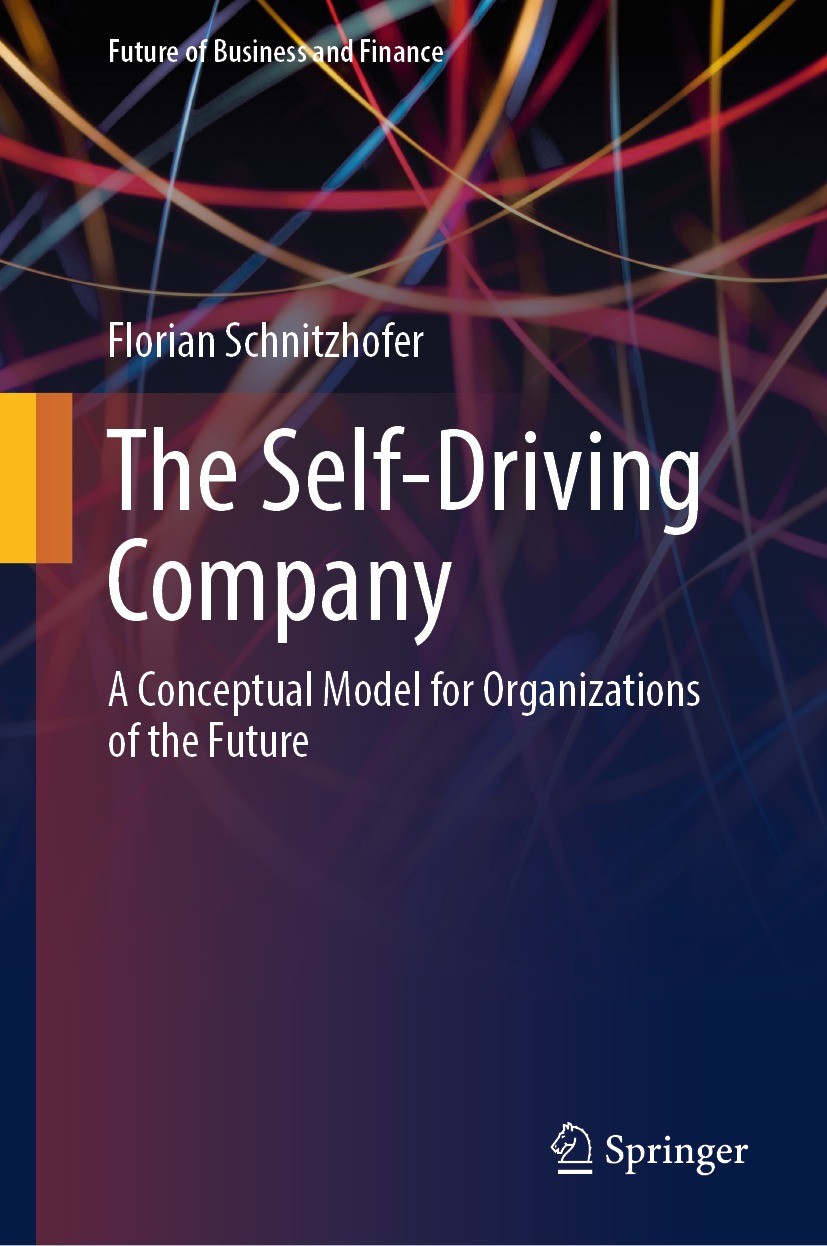
We wrote the book
The Self-Driving Company
Our team laid out the vision, the operating model and the concrete path to an enterprise that steers itself — combining process autonomy, data and AI. Published by Springer, it remains the intellectual foundation of the Sysparency platform. Written a few years ago, before agents were a topic: what the industry discusses today, we worked through back then.
Trust
Your code stays where you want it.
Built for the enterprise from day one: a dedicated environment per customer, in the data zone you choose, behind the identity you already have.
Data zone of your choice
The default is one dedicated environment per customer in the EU cloud, no shared tenancy, full residency control. Other setups are possible on request, such as your own Azure tenant or on premises.
Your code only
Only your custom code is analysed, never SAP standard. CodeADAPTER extracts inside your landscape and uploads through a one-time link; no persistent connection into your SAP.
Your identity
Access through Microsoft Entra ID. The MCP tools are read-only.
Facts without AI
The deterministic core works without any AI. AI enrichment is opt-in, runs inside your data zone and is model-agnostic: your provider’s model or your own. Your data is not used to train models.
SAP Edge Technology Partner
Available on the SAP Store, built to SAP’s standards. S/4HANA ready, BTP compatible, MCP enabled.
GDPR by design
An EU company, a data processing agreement, deletion on request.
FAQ
Straight answers.
The questions buy-ready teams ask before a first conversation.
Complete, navigable, source-cited documentation of a software system, a queryable knowledge graph, and an assistant that answers complex analytical questions. Every documented fact links back to the exact source it came from.
A general AI reads code and guesses — and hallucinates. Sysparency first extracts the system’s facts deterministically, with a citation on every fact, and only then has AI write explanations grounded in those facts. The AI explains; it never invents. Re-running on the same input yields the same output.
Yes. The deterministic core — the documentation structure, the knowledge graph and the query surface — works with no AI at all. AI enrichment is an opt-in you control. With it off, no AI request is ever made.
SAP, mainframe and modern software — across a broad, growing set of legacy and modern languages. The approach is language-agnostic: covering a new technology adds breadth without changing the rest.
Completeness is measured as recall against a manual inventory — the target is ≥95%, and the reference corpus measures 100%. Trust comes from provenance: every fact carries a citation, and every hidden dependency is explicitly flagged rather than silently omitted.
Enterprise single sign-on, encryption at rest, read-only access for the query layer, and an opt-in AI layer that can be kept EU-resident. The whole deterministic pipeline can also run fully on-premises and air-gapped — a proof of value can run before anything leaves your boundary.
The documentation is regenerated deterministically from the code on each upload, with caching so re-runs are cheap; the same input always yields the same output. Comparing two states, and producing documents from them (Markdown, DOCX, XLSX, PDF), is done by your AI client, such as Claude or ChatGPT, through the Sysparency MCP server from the cited sources.
With four views on the same code: modifications to the SAP standard with note provenance and a remediation path, the simplification catalog matched against the objects your code actually calls, the release status of every SAP object you use from the Cloudification Repository, and ATC findings combined with usage. From that, one recommendation per program: standard, key-user extension or side-by-side.
Only your custom code, never SAP standard. Seven read-only tools: graph schema, Cypher query, semantic search over the business descriptions, object list, metadata, read and search source. The server runs in your dedicated environment behind Microsoft Entra ID.
Book a 30-minute demo. A proof of concept on your own system takes about 30 minutes of your team's time: the export of your custom code. Two days later you are working with your analysed system, documentation, knowledge graph and assistant included.
See your own system, made transparent.
Book a 30-minute demo. We’ll show you what Sysparency produces — and how it answers “what does this do, and what breaks if I change it?” in seconds.